NHTSA Proposes Cyan Lighting Standard for Driverless Vehicles
Federal regulators are seeking to standardize a unique blue-green light to help road users identify when an automated driving system is in control.
By Andrew Fletcher ·
The long-standing ambiguity surrounding how autonomous vehicles identify themselves to the public is being addressed by a new federal proposal that selects a single, distinct color.
The National Highway Traffic Safety Administration (NHTSA) has released proposed revisions to Federal Motor Vehicle Safety Standard No. 108, marking a significant step in adapting federal regulations to the realities of driverless technology. By rewriting rules that were originally designed for human-operated cars, the agency aims to reduce regulatory friction for manufacturers while establishing a uniform method for communicating the status of automated driving systems to other road users and law enforcement.
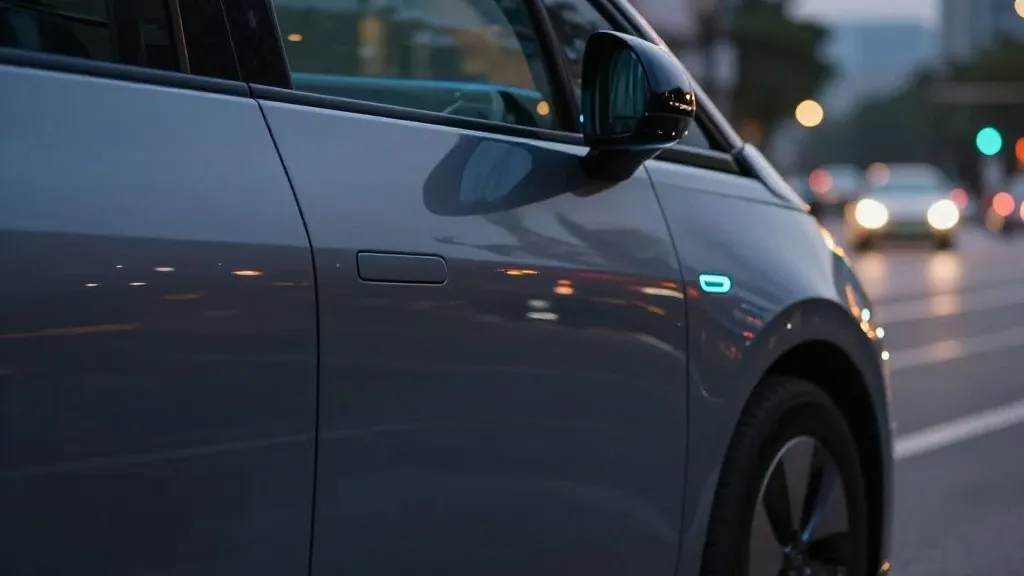
The core of this proposal involves the implementation of cyan-colored marker lamps. The agency argues that this specific blue-green hue fills a visual gap in the existing traffic lighting spectrum, which is currently dominated by red, amber, white, and flashing blue or red lights used for braking, signaling, headlights, and emergency vehicles. By standardizing on cyan, NHTSA intends to provide a clear and consistent signal that no human is actively driving the vehicle.
This move follows a period of experimentation and debate within the industry regarding how best to alert pedestrians and drivers to the presence of a robotaxi. Previous discussions included options such as flashing text displays, audio alerts, and various custom light configurations. While some automakers have explored their own solutions, such as Mercedes-Benz receiving state-level approval for turquoise lights on its Level 3 Drive Pilot system, the federal proposal seeks to create a nationwide standard. Although Mercedes has since shifted its focus to a Level 2++ system, the precedent supports the idea that distinct lighting can serve as an effective indicator of automation.
Under the new rules, the use of cyan marker lights would remain optional for manufacturers. However, by defining official federal standards for the color, brightness, and placement of these lights, NHTSA aims to prevent a fragmented marketplace where different companies use conflicting signals. This standardization would allow operators like Waymo, Nuro, and Zoox, as well as automakers such as GM and Mercedes, to adopt a uniform approach if they choose to implement the feature.
In addition to establishing new lighting requirements, the proposal seeks to remove outdated mandates that are impractical for vehicles without human drivers. Current regulations require the presence of physical hazard switches, manual beam shifters, and turn levers inside the cabin. NHTSA proposes eliminating these requirements, recognizing that they serve little purpose in a fully autonomous configuration. The agency is also updating the 12.8-volt testing standard to accommodate modern LED architectures, thereby reducing administrative hurdles for automakers.
These changes are part of a broader effort by the Department of Transportation to streamline the deployment of autonomous vehicles. The administration is working to make it easier for manufacturers to design cars that lack traditional controls, such as steering wheels and pedals, which are historically required for human operation. By modernizing the regulatory framework, the government hopes to accelerate the transition toward driverless transportation infrastructure.
Despite these efforts to simplify future designs, regulators continue to enforce existing rules strictly on current models. Last month, NHTSA initiated an audit query regarding the Tesla Cybercab to examine the technical data and processes used by Tesla to certify the vehicle. The inquiry focuses on the absence of specific design features, including sideview mirrors, pedals, and a steering wheel, which are currently mandated under FMVSS. This dual approach highlights the ongoing tension between maintaining current safety standards and adapting regulations to accommodate the next generation of autonomous mobility.
Source: The Verge