NASA Resets Lunar Timeline: 2028 Landing Target Holds Firm Despite Architectural Overhaul
A shift in docking protocols and the cancellation of the Lunar Gateway have simplified the path for SpaceX and Blue Origin, keeping the 2028 moon landing on track.
By Ama Boateng ·
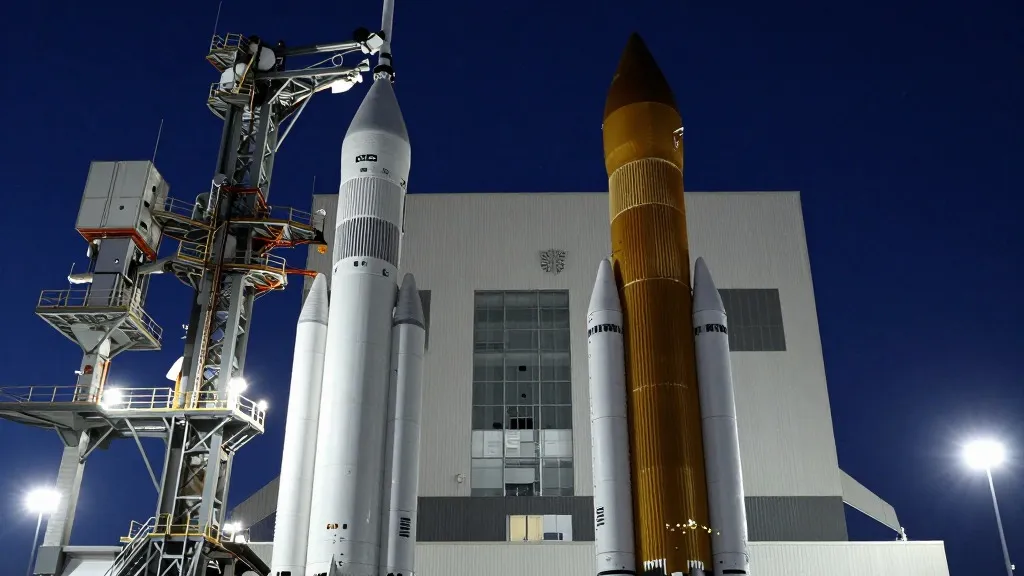
The year 2028 stands as the pivotal deadline for humanity’s return to the lunar surface, a target NASA has reaffirmed with renewed confidence following a major restructuring of its Artemis Program. During a comprehensive briefing held on Friday, agency officials detailed a revised approach that resolves long-standing technical hurdles, most notably regarding how the Orion spacecraft will interact with commercial landers. This marks the first official acknowledgment of substantial architectural changes that streamline the mission flow for both SpaceX and Blue Origin, ensuring that the path to the Moon is not only viable but significantly more efficient than previously proposed.
The journey to this updated strategy has been marked by years of iterative planning and technical challenges. For much of the early 2020s, the program relied on a complex infrastructure known as the Lunar Gateway, which was designed to serve as a relay station in lunar orbit. However, the decision to cancel the Gateway earlier this year fundamentally altered the operational landscape. This cancellation removed a significant dependency, allowing NASA to simplify the mission architecture and focus directly on the capabilities of the commercial partners. The shift reflects a broader trend in space exploration where agencies are increasingly relying on direct, point-to-point solutions rather than permanent orbital infrastructure.
The revised plans introduce distinct protocols for the two primary lander providers. For SpaceX, the new architecture dictates that the Orion spacecraft will dock with the Starship lunar lander in high-Earth orbit. This docking phase occurs before the combined stack transits to the Moon, eliminating the need for the complex maneuvers previously required in near-rectilinear halo orbit. In contrast, the Blue Origin mission profile relies on four separate launches of the New Glenn rocket. Unlike the SpaceX plan, this approach does not involve refueling between spacecraft. Furthermore, the Blue Origin design allows for the Blue Moon lander to rendezvous with Orion in low-Lunar orbit, providing a flexible alternative to the Earth-based docking strategy.
NASA Administrator Jared Isaacman emphasized the agency’s commitment to these new timelines, stating, "This is an achievable path we are on right now. We have the mandate, we have the resources, and the support from our stakeholders to be able to execute, and that’s what we intend to do." This assertion of readiness follows a period of intense scrutiny, with Isaacman’s leadership team conducting a thorough review of every element within the Artemis Program. The goal was to identify areas where changes could help the lunar lander companies accelerate their development and execution, ultimately clearing the way for a smoother return to the Moon.
The immediate next step in this timeline is the Artemis III mission, currently scheduled for launch by the summer of 2027. This mission will serve as a critical demonstration, involving docking maneuvers with both the Blue Moon lander and the Starship vehicle near Earth. It is a vital test of the new protocols and will provide essential data for the subsequent mission. Following the success of this demonstration, NASA is tracking toward the Artemis IV launch in 2028, which will be the first mission to actually put astronauts on the lunar surface under the new architectural framework.
The changes to the SpaceX plan were driven by specific engineering requests made during meetings with NASA in early 2026. SpaceX engineers had previously identified the requirement to dock with Orion in a near-rectilinear halo orbit as a significant challenge, noting that it required more energy and presented other associated difficulties. The cancellation of the Lunar Gateway effectively solved this problem by removing the structural dependency on that orbit, allowing for a more direct and energy-efficient approach. This adjustment highlights how high-level programmatic decisions can have direct, positive impacts on the technical execution of specific components.
As NASA moves forward with these updated plans, the focus shifts to the execution of the 2027 demonstration. The success of Artemis III will be the litmus test for the new docking protocols in high-Earth orbit and the low-Lunar orbit rendezvous. If these maneuvers proceed as planned, the agency will have validated the architecture necessary for the 2028 landing. The streamlined approach reduces complexity and potential points of failure, offering a clearer path to achieving the long-term goal of sustained human presence on the Moon. For now, the agency remains confident that the resources and stakeholder support are in place to meet these ambitious but achievable milestones.
Source: Ars Technica